
The Role of Father's Advice Given to the Erdemoğlu Family in the Journey from Merinos to SASA
Last week, I was in Gaziantep with a group of colleagues as guests of the Erdemoğlu family.
I've always been curious about the people who made those investments and the accumulated wealth behind them, beyond topics like balance sheets, profit and loss, turnover, and investments.
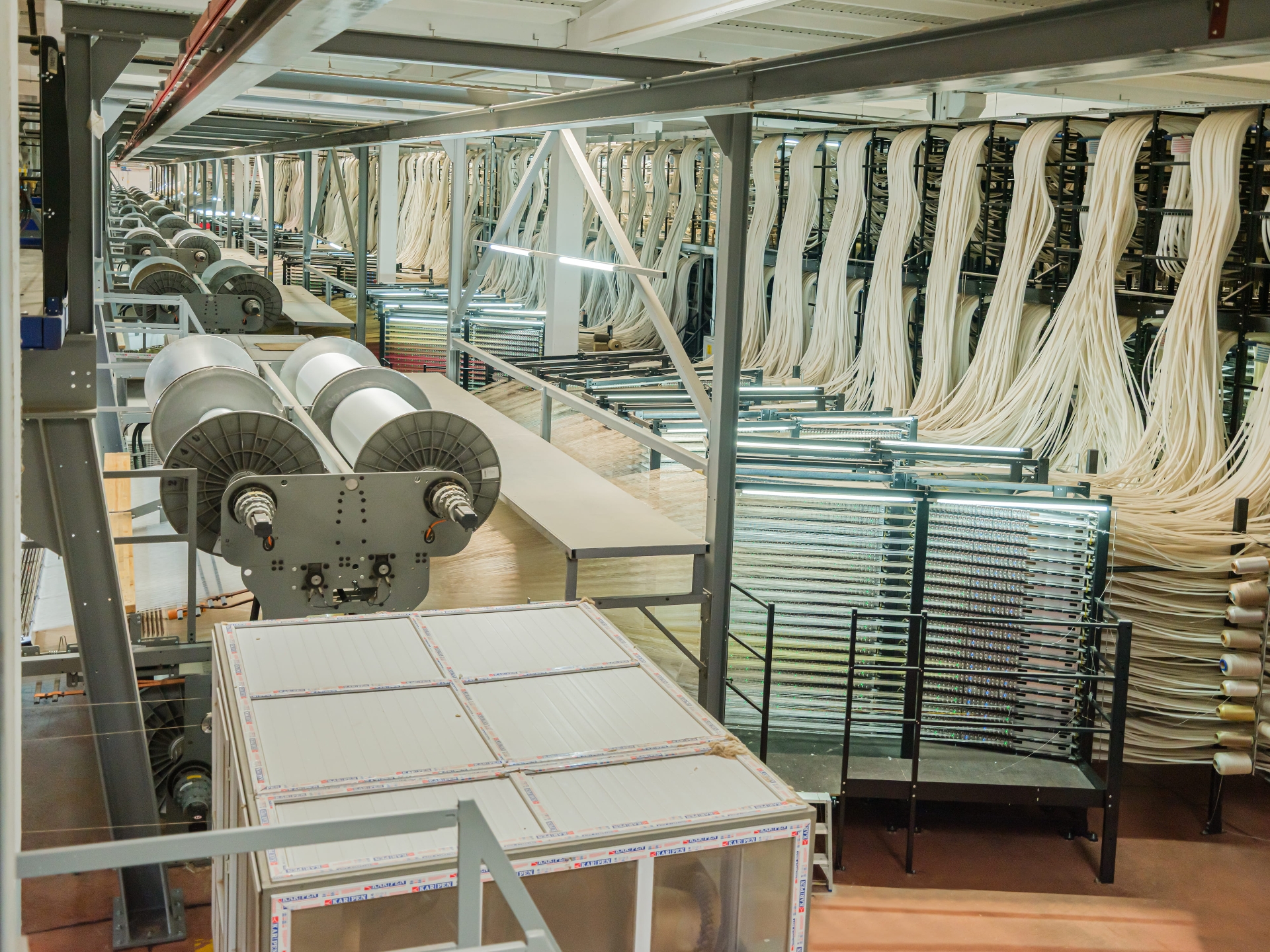
I had the chance to understand these things during a conversation with İbrahim Erdemoğlu while touring the Merinos factory that day.
At one point in our conversation, the topic turned to his father, that is, Mehmet Erdemoğlu, who laid the foundations of Merinos…
İbrahim Erdemoğlu recounted two pieces of advice his father gave his children.
First:
"Stay away from politics."
Second:
"Don’t get involved with football."
I smiled.
Two pieces of advice a father left to his children, who would build one of Türkiye's largest industrial groups, one about politics, the other about football.
Moreover, his children had listened to their father.
They neither entered politics nor appeared in the management of football clubs.
They focused on their businesses.
They expanded their factories.
As I listened to İbrahim Erdemoğlu, I understood that the legacy Mehmet Erdemoğlu left his children was much greater than these two pieces of advice.
In fact, he had taught his children how to relate to money before they even learned about money itself.
The foundations of the family culture that stands behind a multi-billion dollar industrial group today were laid here.
IT ALL STARTED WITH TWO LOOMS
Mehmet Erdemoğlu was born in Besni in 1931. He became familiar with weaving at a young age. He worked as a weaver. When work decreased, he traveled around Anatolia as a street vendor to earn a living. He learned about trade. In 1970, he laid the foundations of a small business that started with two looms in Gaziantep. In 1983, they moved into carpet production.
Today, when you look back, you see Merinos, Dinarsu, SASA, giant factories, and billions of dollars in investments.
Yet, at the beginning of this story, there were two carpet looms.
And at the head of those two looms was a father who taught his children not how to become rich, but how to become successful businessmen.
FATHER'S BUSINESS RULES
The principles Mehmet Erdemoğlu left to his children were quite simple:
Never deviate from honesty.
Never lie.
Never look down on anyone.
Make your payments on time.
Never delay employee salaries.
If you make a promise, keep it, even if it means incurring a loss.
Take care of your family.
Never turn away anyone who comes to your door.
Work hard.
Looking back today, some of these might seem like classic advice given by an old Anatolian merchant to his children. However, in the Erdemoğlu family, a significant portion of this advice transformed into economic rules over time. The family's own constitution emerged.
THEY SET LIMITS FOR THEMSELVES IN 1990
While describing the group's growth, İbrahim Erdemoğlu particularly emphasized the family constitution they created in 1990. The rule was extremely clear: A minimum of 90% of the companies' total profits would be reinvested.
The total amount of money that all family members can receive from the companies, including salaries, cannot exceed 10% of the total profit.
One partner can receive 3%.
Another 2%.
Another even less.
At the end of the day, the total of the partners cannot exceed the 10% limit.
İbrahim Erdemoğlu explained it to me like this: "Instead of spending the money we earned to buy a house, car, etc., we reinvested it back into the business."
This philosophy still stands.
I think this is one of the most important details in the Erdemoğlu family's story.
When family constitutions are mentioned, it is usually about who will work in the company, how shares will be transferred, and how children will participate in management. One of the most fundamental rules the Erdemoğlu family set for itself is directly limiting spending. A limit they set for their own money.
EARN 100 LIRA, PUT AT LEAST 90 LIRA BACK
To explain the system in its simplest form: The company earns 100 lira. The entire family can use a maximum of 10 lira. At least 90 lira is reinvested in the factory, machinery, technology, capacity, and new investments.
One year…
Five years…
Ten years…
Thirty-six years…
The cumulative effect of this discipline is visible in the group's growth figures.
Turnover of approximately 250,000 dollars in 1983…
3 million dollars in 1993…
30 million dollars in 2003…
300 million dollars in 2013…
3 billion dollars in 2023…
Approximately tenfold growth every 10 years.
Explaining this growth solely through entrepreneurship is not enough.
Behind it lies a capital culture that prefers reinvesting rather than spending.
FATHER STARTED IT, HIS CHILDREN CONTINUED IT
Mehmet Erdemoğlu had another aspect to his understanding of money: giving back a portion of his earnings to society. During his lifetime, he provided scholarships, built schools, supported healthcare facilities, and constructed places of worship.
Due to his charitable activities, he was awarded the Philanthropy Award by the then President Süleyman Demirel in 1999 and the Turkish Grand National Assembly's Distinguished Service Award in 2000. Mehmet Erdemoğlu passed away in 2006. Four years later, in 2010, his children established the Mehmet Erdemoğlu Foundation in his name, thus institutionalizing the tradition of charity their father had started.
Schools…
Faculties…
Student dormitories…
Teacher residences…
Libraries…
Healthcare facilities…
Social facilities…
Places of worship…
Besni and Adıyaman, where their father was born, held a significant place in the family's social investments. As their business expand, so did the scale of their charitable activities.
THEY BUILT BOTH MOSQUES AND CEMEVİS
While speaking with İbrahim Erdemoğlu, a detail he mentioned particularly caught my attention. The Erdemoğlu family built both mosques and cemevis.
While explaining this, İbrahim Erdemoğlu clearly described their approach to charitable works:
"If members of other religions lived in large numbers in our city and needed places of worship, we would build their places of worship as well."
I think this sentence speaks volumes more than the number of buildings constructed.
There is an awareness here of what people need, not what they believe in.
If a mosque is needed, then a mosque…
If a cemevi is needed, then a cemevi…
If a school is needed, then a school…
If a health facility is needed, then a health facility…
This approach also aligns with the understanding Mehmet Erdemoğlu left to his children:
Not discriminating against people.
Not turning away anyone who comes to the door.
Going wherever there is a need.
IT RETURNED TO THE LANDS THEY EARNED
When you look at the map of the Erdemoğlu family's social investments, one place stands out:
Besni.
This is where their father was born.
Today, it is possible to see the names of Mehmet Erdemoğlu and his family members on the signs of numerous educational institutions and social investments in the region.
Schools…
Faculties…
Student dormitories…
Teacher residences…
Libraries…
Social facilities…
Mosque…
Cemevi…
The family's industrial investments spread from Gaziantep to Adana, and their trade extended from Türkiye to all corners of the world. A portion of the money earned always returned to the land they came from. Following the February 6th earthquakes, aid and investments aimed at meeting the needs of the region continued this approach.
I believe there is another silent piece of advice Mehmet Erdemoğlu left to his children here: "Don't forget where you came from."
İBRAHİM ERDEMOĞLU WAS GOING TO THE SHOP AT EIGHT YEARS OLD
İbrahim Erdemoğlu's own story also shows how his father's business philosophy was passed on to his children.
He was born in Besni in 1962.
He completed his primary, secondary, and high school education in Gaziantep.
He graduated from the Physics Department of Karadeniz Technical University.
But his introduction to the business world came long before university.
He was going to the shop on weekends when he was only eight years old.
He worked as an apprentice.
He wove carpets.
During his university years, he was involved in the carpet trade.
Afterwards, he and his brothers expanded the business they inherited from their father.
Merinos grew.
Dinarsu joined the group.
In 2015, SASA was acquired.
The family business, which started with carpets, expanded over time to polyester and petrochemicals.
However, while the size of the companies changed, some rules within the family remained the same.
NO POLITICS, NO FOOTBALL
Let's return to the two pieces of advice İbrahim Erdemoğlu gave me.
"Stay away from politics."
"Don't get involved with football."
We cannot ask Mehmet Erdemoğlu today what concerns led him to give these two pieces of advice.
When we look at the path their children followed, an interesting picture emerges.
They didn't waste their energy on politics.
They didn't get involved in the management and power struggles of football clubs.
They reinvested the vast majority of their earnings back into business.
They continued their father's tradition of helping others.
Perhaps the model that the Erdemoğlu family still applies today can be summarized in four sentences:
Don't get involved in politics.
Don't get involved in football.
Reinvest at least 90% of your earnings back into the business.
Give back to society, regardless of who they are.
The first two were the father's advice.
The third was an philosophy that the children transformed into an economic rule in 1990.
The fourth is a tradition passed down from father to children.
THE GREATEST INHERITANCE FROM A FATHER
After leaving Gaziantep, I reflected on two pieces of advice my father, İbrahim Erdemoğlu, gave me.
A father can leave his children a company.
He can leave them land.
He can leave them a factory.
He can leave them money.
Mehmet Erdemoğlu left them something far more difficult:
A culture of how to manage money, work, and power.
His children built their family constitution on that culture.
They reinvested at least 90 out of every 100 lira they earned back into the business.
That capital grew.
From two looms to factories…
From carpets to polyester…
From Merinos to SASA.
The two pieces of advice their father gave them years ago still stand:
Stay away from politics.
Don't get involved with football.
I love the Anatolian people and culture. Every time I encounter Anatolia, I witness our pure, unadulterated culture, the values that still keep us going.
Speaking of fatherly advice, I'm reminded of my late father's words: "Don't take the curse of the oppressed, it will come back to you slowly but surely." "Don't say 'what I have become,' say 'what I will become.'"
Perhaps this is what keeps the Anatolian people going, our culture passed down from generation to generation. To cherish our ancestors, to be shaped by their words and traditions, and to carry this forward to future generations...
That's precisely why these two sentences Mehmet Erdemoğlu said to his children sound a little different today.
Who knows, perhaps the most valuable inheritance they received from their father wasn't the factory or the money.
It was knowing what not to get involved in.
Source: Patronlar Dünyası
I've always been curious about the people who made those investments and the accumulated wealth behind them, beyond topics like balance sheets, profit and loss, turnover, and investments.
I had the chance to understand these things during a conversation with İbrahim Erdemoğlu while touring the Merinos factory that day.
At one point in our conversation, the topic turned to his father, that is, Mehmet Erdemoğlu, who laid the foundations of Merinos…
İbrahim Erdemoğlu recounted two pieces of advice his father gave his children.
First:
"Stay away from politics."
Second:
"Don’t get involved with football."
I smiled.
Two pieces of advice a father left to his children, who would build one of Türkiye's largest industrial groups, one about politics, the other about football.
Moreover, his children had listened to their father.
They neither entered politics nor appeared in the management of football clubs.
They focused on their businesses.
They expanded their factories.
As I listened to İbrahim Erdemoğlu, I understood that the legacy Mehmet Erdemoğlu left his children was much greater than these two pieces of advice.
In fact, he had taught his children how to relate to money before they even learned about money itself.
The foundations of the family culture that stands behind a multi-billion dollar industrial group today were laid here.
IT ALL STARTED WITH TWO LOOMS
Mehmet Erdemoğlu was born in Besni in 1931. He became familiar with weaving at a young age. He worked as a weaver. When work decreased, he traveled around Anatolia as a street vendor to earn a living. He learned about trade. In 1970, he laid the foundations of a small business that started with two looms in Gaziantep. In 1983, they moved into carpet production.
Today, when you look back, you see Merinos, Dinarsu, SASA, giant factories, and billions of dollars in investments.
Yet, at the beginning of this story, there were two carpet looms.
And at the head of those two looms was a father who taught his children not how to become rich, but how to become successful businessmen.
FATHER'S BUSINESS RULES
The principles Mehmet Erdemoğlu left to his children were quite simple:
Never deviate from honesty.
Never lie.
Never look down on anyone.
Make your payments on time.
Never delay employee salaries.
If you make a promise, keep it, even if it means incurring a loss.
Take care of your family.
Never turn away anyone who comes to your door.
Work hard.
Looking back today, some of these might seem like classic advice given by an old Anatolian merchant to his children. However, in the Erdemoğlu family, a significant portion of this advice transformed into economic rules over time. The family's own constitution emerged.
THEY SET LIMITS FOR THEMSELVES IN 1990
While describing the group's growth, İbrahim Erdemoğlu particularly emphasized the family constitution they created in 1990. The rule was extremely clear: A minimum of 90% of the companies' total profits would be reinvested.
The total amount of money that all family members can receive from the companies, including salaries, cannot exceed 10% of the total profit.
One partner can receive 3%.
Another 2%.
Another even less.
At the end of the day, the total of the partners cannot exceed the 10% limit.
İbrahim Erdemoğlu explained it to me like this: "Instead of spending the money we earned to buy a house, car, etc., we reinvested it back into the business."
This philosophy still stands.
I think this is one of the most important details in the Erdemoğlu family's story.
When family constitutions are mentioned, it is usually about who will work in the company, how shares will be transferred, and how children will participate in management. One of the most fundamental rules the Erdemoğlu family set for itself is directly limiting spending. A limit they set for their own money.
EARN 100 LIRA, PUT AT LEAST 90 LIRA BACK
To explain the system in its simplest form: The company earns 100 lira. The entire family can use a maximum of 10 lira. At least 90 lira is reinvested in the factory, machinery, technology, capacity, and new investments.
One year…
Five years…
Ten years…
Thirty-six years…
The cumulative effect of this discipline is visible in the group's growth figures.
Turnover of approximately 250,000 dollars in 1983…
3 million dollars in 1993…
30 million dollars in 2003…
300 million dollars in 2013…
3 billion dollars in 2023…
Approximately tenfold growth every 10 years.
Explaining this growth solely through entrepreneurship is not enough.
Behind it lies a capital culture that prefers reinvesting rather than spending.
FATHER STARTED IT, HIS CHILDREN CONTINUED IT
Mehmet Erdemoğlu had another aspect to his understanding of money: giving back a portion of his earnings to society. During his lifetime, he provided scholarships, built schools, supported healthcare facilities, and constructed places of worship.
Due to his charitable activities, he was awarded the Philanthropy Award by the then President Süleyman Demirel in 1999 and the Turkish Grand National Assembly's Distinguished Service Award in 2000. Mehmet Erdemoğlu passed away in 2006. Four years later, in 2010, his children established the Mehmet Erdemoğlu Foundation in his name, thus institutionalizing the tradition of charity their father had started.
Schools…
Faculties…
Student dormitories…
Teacher residences…
Libraries…
Healthcare facilities…
Social facilities…
Places of worship…
Besni and Adıyaman, where their father was born, held a significant place in the family's social investments. As their business expand, so did the scale of their charitable activities.
THEY BUILT BOTH MOSQUES AND CEMEVİS
While speaking with İbrahim Erdemoğlu, a detail he mentioned particularly caught my attention. The Erdemoğlu family built both mosques and cemevis.
While explaining this, İbrahim Erdemoğlu clearly described their approach to charitable works:
"If members of other religions lived in large numbers in our city and needed places of worship, we would build their places of worship as well."
I think this sentence speaks volumes more than the number of buildings constructed.
There is an awareness here of what people need, not what they believe in.
If a mosque is needed, then a mosque…
If a cemevi is needed, then a cemevi…
If a school is needed, then a school…
If a health facility is needed, then a health facility…
This approach also aligns with the understanding Mehmet Erdemoğlu left to his children:
Not discriminating against people.
Not turning away anyone who comes to the door.
Going wherever there is a need.
IT RETURNED TO THE LANDS THEY EARNED
When you look at the map of the Erdemoğlu family's social investments, one place stands out:
Besni.
This is where their father was born.
Today, it is possible to see the names of Mehmet Erdemoğlu and his family members on the signs of numerous educational institutions and social investments in the region.
Schools…
Faculties…
Student dormitories…
Teacher residences…
Libraries…
Social facilities…
Mosque…
Cemevi…
The family's industrial investments spread from Gaziantep to Adana, and their trade extended from Türkiye to all corners of the world. A portion of the money earned always returned to the land they came from. Following the February 6th earthquakes, aid and investments aimed at meeting the needs of the region continued this approach.
I believe there is another silent piece of advice Mehmet Erdemoğlu left to his children here: "Don't forget where you came from."
İBRAHİM ERDEMOĞLU WAS GOING TO THE SHOP AT EIGHT YEARS OLD
İbrahim Erdemoğlu's own story also shows how his father's business philosophy was passed on to his children.
He was born in Besni in 1962.
He completed his primary, secondary, and high school education in Gaziantep.
He graduated from the Physics Department of Karadeniz Technical University.
But his introduction to the business world came long before university.
He was going to the shop on weekends when he was only eight years old.
He worked as an apprentice.
He wove carpets.
During his university years, he was involved in the carpet trade.
Afterwards, he and his brothers expanded the business they inherited from their father.
Merinos grew.
Dinarsu joined the group.
In 2015, SASA was acquired.
The family business, which started with carpets, expanded over time to polyester and petrochemicals.
However, while the size of the companies changed, some rules within the family remained the same.
NO POLITICS, NO FOOTBALL
Let's return to the two pieces of advice İbrahim Erdemoğlu gave me.
"Stay away from politics."
"Don't get involved with football."
We cannot ask Mehmet Erdemoğlu today what concerns led him to give these two pieces of advice.
When we look at the path their children followed, an interesting picture emerges.
They didn't waste their energy on politics.
They didn't get involved in the management and power struggles of football clubs.
They reinvested the vast majority of their earnings back into business.
They continued their father's tradition of helping others.
Perhaps the model that the Erdemoğlu family still applies today can be summarized in four sentences:
Don't get involved in politics.
Don't get involved in football.
Reinvest at least 90% of your earnings back into the business.
Give back to society, regardless of who they are.
The first two were the father's advice.
The third was an philosophy that the children transformed into an economic rule in 1990.
The fourth is a tradition passed down from father to children.
THE GREATEST INHERITANCE FROM A FATHER
After leaving Gaziantep, I reflected on two pieces of advice my father, İbrahim Erdemoğlu, gave me.
A father can leave his children a company.
He can leave them land.
He can leave them a factory.
He can leave them money.
Mehmet Erdemoğlu left them something far more difficult:
A culture of how to manage money, work, and power.
His children built their family constitution on that culture.
They reinvested at least 90 out of every 100 lira they earned back into the business.
That capital grew.
From two looms to factories…
From carpets to polyester…
From Merinos to SASA.
The two pieces of advice their father gave them years ago still stand:
Stay away from politics.
Don't get involved with football.
I love the Anatolian people and culture. Every time I encounter Anatolia, I witness our pure, unadulterated culture, the values that still keep us going.
Speaking of fatherly advice, I'm reminded of my late father's words: "Don't take the curse of the oppressed, it will come back to you slowly but surely." "Don't say 'what I have become,' say 'what I will become.'"
Perhaps this is what keeps the Anatolian people going, our culture passed down from generation to generation. To cherish our ancestors, to be shaped by their words and traditions, and to carry this forward to future generations...
That's precisely why these two sentences Mehmet Erdemoğlu said to his children sound a little different today.
Who knows, perhaps the most valuable inheritance they received from their father wasn't the factory or the money.
It was knowing what not to get involved in.
Source: Patronlar Dünyası